
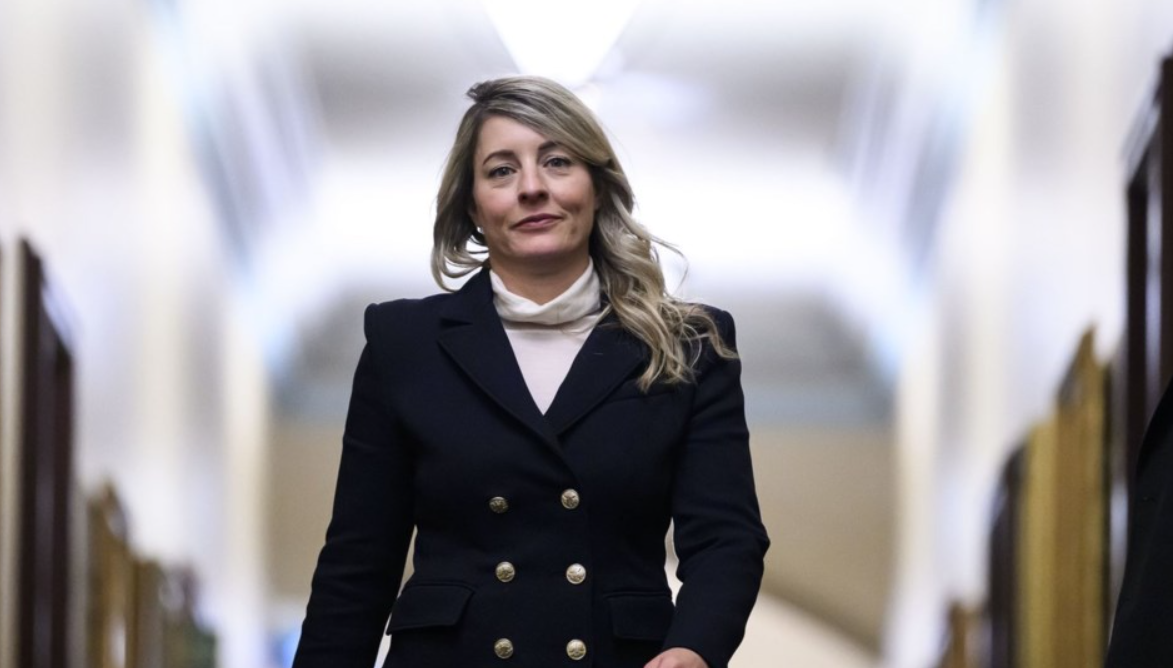
Mélanie Joly has emerged as one of Canada’s most influential political leaders, embodying a new model of diplomacy that blends strategic pragmatism with values-driven engagement. As Minister of Foreign Affairs, she operates at the forefront of international relations, representing Canada in a world increasingly defined by complexity, competition, and rapid change.
Joly’s entry into politics was marked by ambition and visibility. Initially gaining public attention through her candidacy in Montreal’s mayoral race, she demonstrated early on a capacity for communication and public engagement. Although she did not secure victory in that contest, the campaign established her as a serious political figure and laid the foundation for her subsequent transition to federal politics.
After being elected to the House of Commons, Joly quickly advanced through key ministerial roles. Her tenure as Minister of Canadian Heritage highlighted her focus on culture, identity, and the role of media in shaping national narratives. Later, as Minister of Economic Development, she engaged with issues of innovation, regional growth, and economic resilience—experience that would prove valuable in her current role in foreign affairs.
As Minister of Foreign Affairs, Joly’s responsibilities extend far beyond traditional diplomacy. She is tasked with managing Canada’s relationships with allies, responding to global crises, and positioning the country within an increasingly multipolar world. Her tenure has coincided with significant geopolitical challenges, including heightened tensions between major powers, evolving security threats, and humanitarian crises that demand coordinated international responses.
One of Joly’s defining attributes is her communication style. In diplomacy, language is not merely a tool—it is a strategic instrument. Joly has demonstrated an ability to articulate Canada’s positions clearly while maintaining the nuance required in international negotiations. This balance is essential in building trust with allies and navigating sensitive geopolitical dynamics.
Joly has also emphasized a values-based approach to foreign policy. This includes advocating for human rights, gender equality, and democratic governance. While such principles are widely endorsed, their implementation in international relations often involves navigating competing interests and complex trade-offs. Joly’s approach reflects an effort to align Canada’s actions with its stated values while maintaining practical effectiveness.
Another key aspect of her leadership is multilateral engagement. In an interconnected world, global challenges—from climate change to security threats—cannot be addressed unilaterally. Joly has been actively involved in international forums, working with organizations such as the United Nations and NATO to coordinate responses and strengthen alliances. Her participation in these institutions underscores Canada’s commitment to collaborative problem-solving on the global stage.
Joly’s tenure also illustrates the evolving nature of diplomacy in the digital age. Public diplomacy, media engagement, and real-time communication have become integral components of foreign policy. Leaders are now expected not only to negotiate behind closed doors but also to communicate directly with global audiences. Joly has embraced this shift, using modern communication channels to convey Canada’s positions and engage with both domestic and international audiences.
Despite her achievements, Joly’s role is not without challenges. Diplomacy often involves navigating conflicting priorities, managing crises, and responding to rapidly changing conditions. Decisions made in this domain can have far-reaching consequences, requiring a careful balance between principle and pragmatism.
As global dynamics continue to evolve, Mélanie Joly’s leadership will remain central to Canada’s international presence. Her ability to navigate complexity, build alliances, and articulate a coherent vision for Canada’s role in the world positions her as a key figure in shaping the country’s foreign policy in the years ahead.
